
Featured Offer: AI Accelerators
Industry-optimized AI tools designed to solve your toughest challenges in weeks, not months.
Capabilities
Discover Our Benefits & Values


Industry-optimized AI tools designed to solve your toughest challenges in weeks, not months.


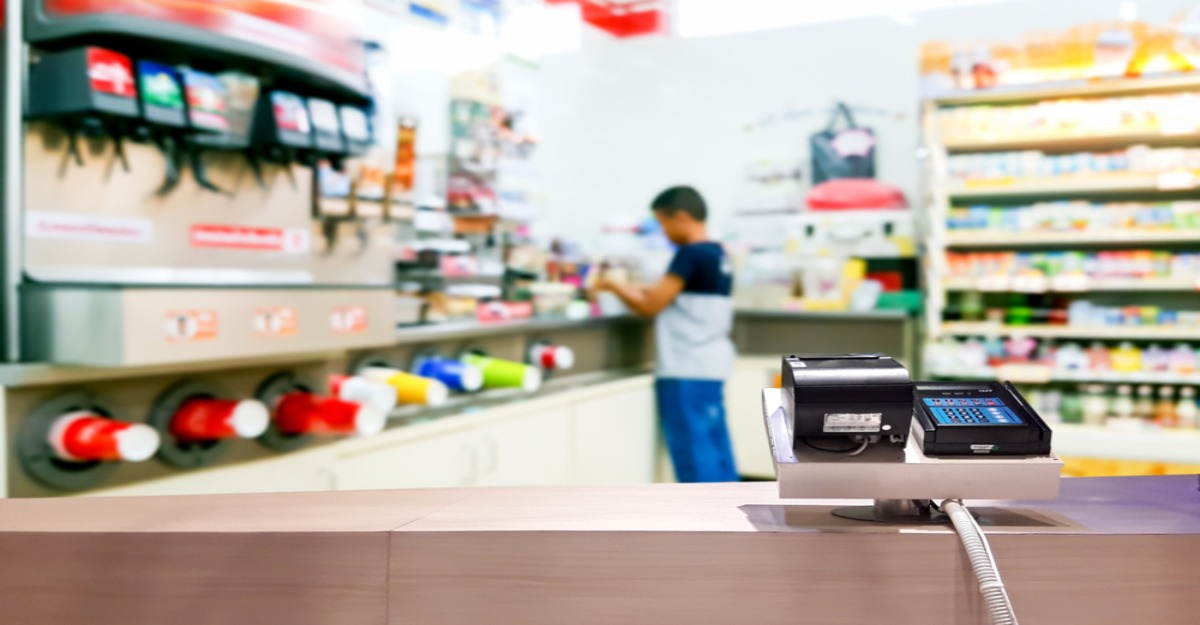
Most quick-service restaurant environments are not short on technology. Walk into any modern store, and you will find state-of-the-art point-of-sale systems, digital inventory trackers, and robust training portals. Operations leaders invest heavily in these platforms to ensure their locations run as smoothly as possible.
However, a massive disconnect still exists between the corporate office and the front line. Despite all this investment, teams constantly struggle to resolve simple issues during peak hours. They are not short on systems. They are short on access.
This does not mean a lack of access to software logins or hardware devices. It means a lack of access to usable answers in the exact moment a problem occurs.
Understanding this distinction is critical for any operations leader looking to scale their business. We will explore the harsh reality of real-time problem solving, why dumping more documentation on your teams actually worsens the issue, and how shifting toward immediate, contextual support stabilizes your entire operation. We will also look at the practical role artificial intelligence plays in making these answers instantly accessible.
To understand the problem with access, we have to look at what happens when things go wrong in a live environment. Imagine it is the middle of the Friday lunch rush. A critical piece of equipment fails. A strange payment issue appears on the main register. An inventory report does not match the physical count in the walk-in freezer.
At that exact moment, the shift manager has a few options to resolve the problem.
First, they can stop what they are doing and search the corporate documentation. Second, they can step off the floor to call the IT help desk. Third, they can escalate the issue to their district manager. Fourth, they can attempt a quick workaround to just keep the line moving.
None of these options are ideal when the drive-thru line is building and customers are waiting. Time is the most limited resource in a restaurant. When a manager steps away to hunt for an answer, the entire rhythm of the store breaks down. Service times spike, customer satisfaction drops, and team stress skyrockets.
The core issue here is not that the answer does not exist. The company likely has a detailed procedure for that exact equipment failure. The problem is that the answer is completely inaccessible in the high-pressure moment it is needed.
When operations leaders notice that teams are struggling to execute procedures, their natural response is to create more resources. They write longer standard operating procedures (SOPs). They build more comprehensive manuals. They introduce highly structured reporting processes.
This approach certainly improves informational coverage. It ensures that every possible scenario is documented somewhere. However, it completely destroys usability.
A 60-page PDF guide on maintaining the espresso machine is highly useful during a quiet onboarding session. It is completely useless when a store manager needs to make a critical decision in under a minute.
In practice, adding more information often creates more friction. It requires more searching, more reading, and more interpretation. When an employee has to skim through paragraphs of text to find a single troubleshooting step, they are likely to misunderstand the instructions. This leads to more inconsistency across your locations. The problem shifts from not having the answers to not being able to use those answers quickly.
If complex documentation is not the solution, what do store teams actually need to succeed? In real-world environments, the requirement is refreshingly simple.
Frontline workers need a clear answer, written in plain language, directly tied to their specific issue. Most importantly, it must be delivered immediately. They do not need a lengthy process to interpret. They need a quick decision they can act on right away.
This distinction matters deeply for operational success. In a live environment, speed and clarity always outweigh completeness. A shift manager does not need to know the engineering specifications of the broken card reader. They just need the three exact steps required to reset it.
When you strip away the fluff and deliver only the necessary action steps, you empower your teams to handle problems independently.
To fix the access gap, the entire model of frontline support must evolve. The shift is not toward adding more centralized support layers or hiring more help desk agents. The shift is toward making support immediate, contextual, and consistent.
This fundamentally changes the role of support within your organization. Historically, support has been reactive and remote. An issue happens, the team raises a flag, and someone far away tries to fix it.
The new model makes support embedded and operational. Instead of forcing an employee to step out of their workflow to find help, the help becomes a natural part of the workflow itself.
When a cashier encounters an error code, the POS system should immediately surface the specific fix. When a cook forgets a recipe build, a digital screen above the station should display a quick visual reference. You must put the answers exactly where the work actually happens.
When you improve access to real-time answers, the benefits cascade throughout your entire operation.
First, common issues get resolved instantly without unnecessary escalation. Your help desk volume drops significantly because store teams can fix basic problems themselves. Second, resolution becomes faster and far more consistent. You stop relying on a manager's memory or a hastily invented workaround.
Most importantly, your operation does not slow down while waiting for remote support. That is where the real financial impact shows up. Your stores maintain their speed during peak hours. Your teams stay calm under pressure. You deliver the exact same customer experience whether it is a Tuesday morning or a Saturday night.
As operations grow, small inefficiencies multiply. Across dozens or hundreds of locations, minor delays turn into massive unnecessary costs. At scale, immediate access becomes your primary limiting factor.
This conversation about frictionless access is exactly where artificial intelligence becomes highly relevant. However, the true value of AI is not in the way it is often discussed in corporate boardrooms.
The immediate value is not in replacing your current systems or adding layers of futuristic complexity. The practical value of AI lies entirely in reducing the distance between a question, an answer, and an action.
Modern AI tools allow store teams to use natural language to find exactly what they need. Instead of navigating complex folder structures, a manager can simply type, "How do I clear error code 44 on the fryer?"
The AI scans your existing documentation, extracts the exact relevant steps, and presents a short, readable answer in seconds. When that distance between question and action shrinks, decisions happen faster. Execution improves drastically. Your operations become incredibly predictable.
The next phase of store support is not about purchasing more software or writing thicker manuals. It is entirely about removing friction from the daily lives of your frontline workers.
The organizations that successfully solve for access will operate more consistently and scale much more effectively. They will spend significantly less time reacting to the exact same minor issues every week.
Because in the end, the ultimate operational advantage is not having the most information housed on a corporate server. It is empowering your teams to actually use that information when it matters most. Take a hard look at your current support processes. Ask your teams how long it takes to find a simple answer during a rush. Use those insights to start closing the gap between your technology and your frontline access today.
Thank you for reading! You're welcome to connect with me on LinkedIn.
Solugenix leads in IT services, delivering comprehensive AI‑powered, human‑led technology solutions, talent, and managed services to global enterprises. We specialize in complex, highly regulated industries, helping organizations stay competitive through responsible, technology‑driven growth guided by deep human expertise.
Ready to talk? Start a conversation here.
These Stories on AI


Technology & Process for Growth
601 Valencia Ave, Suite 260
Brea, CA 92823
Call us: 1-866-749-7658
No Comments Yet
Let us know what you think